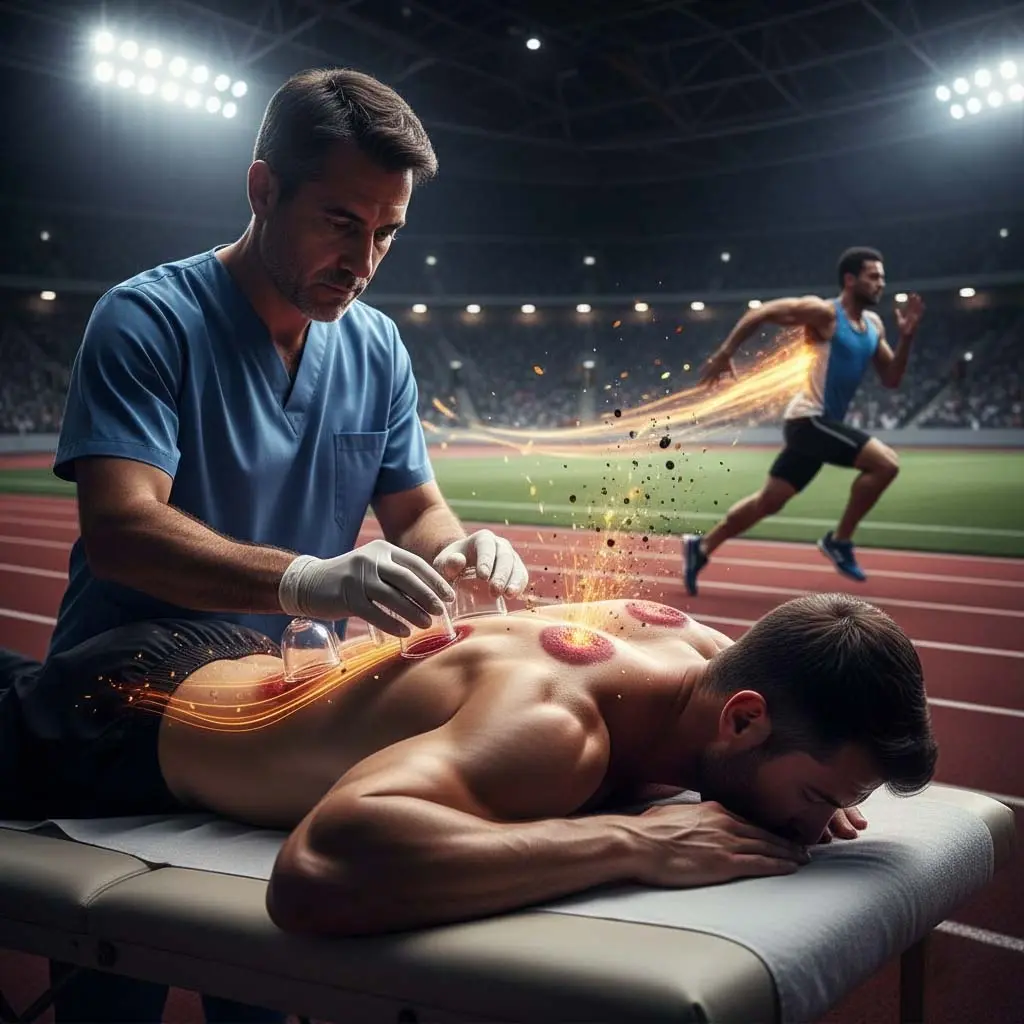
Hijama for Sports Recovery
Gain a competitive edge with advanced therapy to accelerate recovery, reduce soreness, and boost performance.
If you are an athlete in Lahore, you know the reality: you train hard, you push your limits, and often you wake up the next day with a body that feels like it's been hit by a truck. Whether you are a fast bowler, a bodybuilder, or a runner, recovery is the most critical part of your routine.
At Al Madina Hijama Center, we specialize in Hijama for sports recovery, helping athletes get back in the game faster, stronger, and naturally.
Why Athletes Are Turning to Hijama (Cupping)
When working out, your muscles develop microscopic tears. This process also produces lactic acid and metabolic waste. If this waste isn't cleared out, it settles in your tissues, leading to knots, stiffness, and long-term injury risks.
While a standard massage pushes down on sore muscles, cupping therapy uses suction to pull the muscle and fascia upwards. This decompression technique is far more effective at deep tissue release than simple rubbing.
1. Instant Lactic Acid Removal (Detox)
Think of Hijama as a deep clean for your muscles. The suction draws stagnant blood and lactic acid to the skin's surface. Once this toxic blood is removed, fresh, oxygen-rich blood rushes in to nourish the muscle. This dramatically speeds up recovery time.
2. Natural Pain Relief
Hijama therapy triggers the body to release natural chemicals (like endorphins) and reduces inflammation in joints and tendons. It is highly effective for chronic back pain, stiff necks, and "text neck" from bad posture.
3. Fixing "Tight" Muscles (Fascia Release)
Dry Cupping stretches the fascia (connective tissue covering your muscles), loosening it up and restoring your flexibility. This is crucial for bowlers and martial artists who need a full range of motion.
Tailored Hijama for Every Sport
Cricketers
Focus on the rotator cuff (shoulder), lower back, and hamstrings to prevent common bowling injuries.
Bodybuilders
Target the traps, lats, and quads to relieve tension from heavy lifting and improve muscle definition.
Runners & Footballers
Treat the calves, shins (for shin splints), and plantar fascia (feet) to manage impact stress.
Is Hijama Safe for Athletes?
Absolutely. At Al Madina Hijama Center, we adhere to the highest hygiene standards.
Sterile & Safe
We use brand-new, single-use cups for every client.
Sunnah Compliant
We perform Hijama according to Sunnah dates and methods, ensuring you get both spiritual and physical healing.
The "Marks"
The circular marks are not bruises — they are a sign that Hijama has successfully pulled stagnation to the surface. These marks are painless and typically fade within 3–7 days.
Key Benefits Overview
- Accelerates muscle repair and reduces recovery time
- Effectively clears lactic acid and reduces DOMS soreness
- Increases blood flow and oxygenation to tired muscles
- Releases tight fascia and improves flexibility
- Reduces inflammation from intense training
- Enhances overall athletic performance and endurance
✅ Indications
- Delayed Onset Muscle Soreness (DOMS)
- Muscle strains in legs, back, and shoulders
- IT Band Syndrome and runner's knee
- Improving flexibility and range of motion for sports like martial arts or gymnastics
- Pre-event preparation to optimize muscle function
- Post-event recovery to minimize downtime
- General maintenance for active individuals
⚠️ Contraindications
- During menstrual cycle — Hijama cannot be done
- Acute injuries like fresh sprains, tears, or fractures
- Directly over areas with torn ligaments or muscles
- Immediately before high-intensity competition (allow 2-3 days)
- If severely dehydrated or exhausted
- Open wounds, skin infections, or bleeding disorders
The Sports Recovery Process
Performance Assessment
We evaluate your training regimen
areas of muscle strain
areas of muscle strain
and recovery goals.
and recovery goals.
Targeted Sterilization
The specific muscle groups and areas of tightness are prepared for treatment.
Dynamic Cupping
A combination of stationary and massage cupping is used to release deep muscle knots and improve circulation.
Recovery Stimulation
Blood cupping is often applied to key points to draw out metabolic waste and accelerate the healing process.
Post-Session Protocol
You receive professional advice on hydration
stretching
stretching
and when to resume training.
and when to resume training.
Before the Session
- Discuss your training schedule and recovery needs with the therapist
- Ensure you are well-hydrated before your appointment
- Avoid a heavy workout immediately before your session
- Come with clean skin, free from oils or lotions
After the Session
- Engage in light, active recovery like walking or gentle stretching
- Hydrate aggressively with water and electrolytes
- Avoid intense training, saunas, or hot tubs for 24-48 hours
- Consume a protein-rich meal to support muscle repair
Frequently Asked Questions
We recommend avoiding intense training for at least 24–48 hours. Light active recovery such as walking or gentle stretching is fine. After 48 hours you can typically return to full training, often feeling significantly better than before.
They serve different purposes. Sports massage works on surface muscles. Hijama goes deeper, drawing out inflammatory waste products from the tissue. For maximum benefit, the two can be used together as part of a recovery programme.
We recommend receiving it at least 3–5 days before a competition, not immediately before. After a competition it is an excellent recovery tool and can be done within 24–48 hours of the event.
The marks are superficial and do not affect muscle function or physical performance. Many top athletes train with them. They typically fade within 3–7 days.
Book Your Session
Accelerate your recovery and get back in the game.
per cup
Session Duration
Approx. 30-45 minutes
Your Specialists

Mr. Jameel ur Rehman
Certified Hijama Therapist
Ms. Fatima Khan
Certified Hijama Therapist