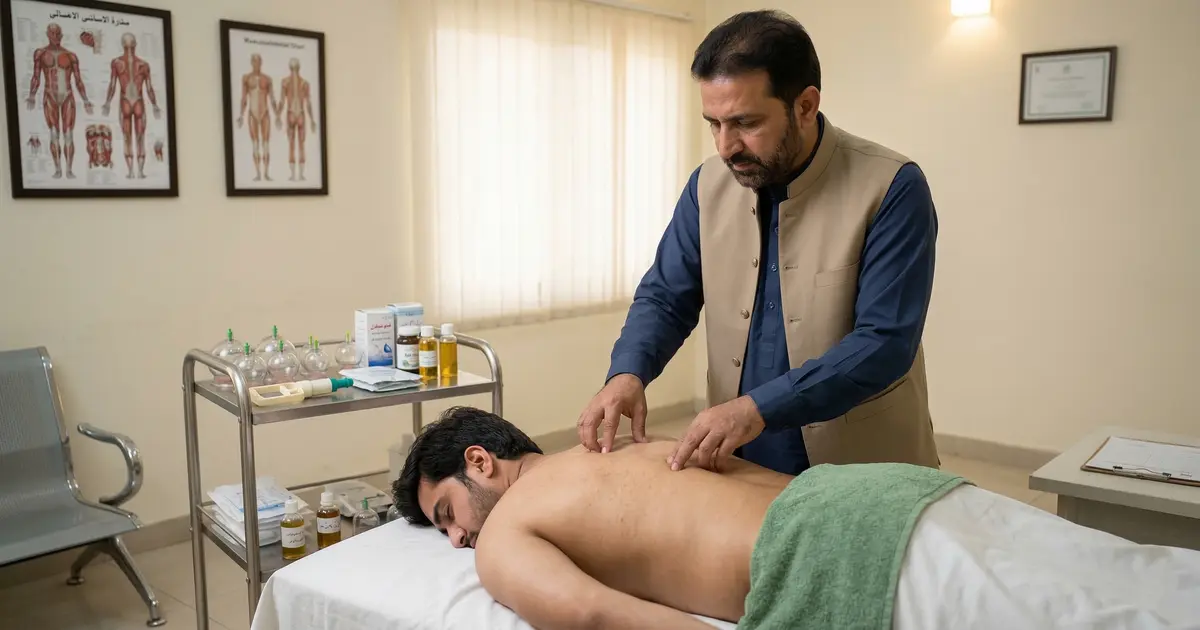
Hijama cupping therapy is a centuries-old natural healing practice that uses a vacuum on the skin to help remove toxins from the body and improve blood circulation. By placing special cups on specific points, this therapy helps restore the body's natural balance and provides deep relaxation to the muscles and nervous system.
The success of this treatment depends entirely on how accurately you can identify Hijama trigger points for your specific health issues. Finding these exact locations is crucial because, by targeting the right nerve and muscle groups, the suction of cupping effectively releases deep-seated tension. When the therapist locates these points accurately, the healing process becomes much faster and more effective than with regular cupping.
What are Hijama Trigger Points?
In scientific terms, trigger points are highly sensitive areas found in skeletal muscles and are associated with small knots (muscle knots) formed in the tough muscle fibers. These knots can cause localized pain or sometimes referred pain to other parts of the body. Cupping helps to relax these muscle fibers and restore normal blood flow.
It is important to understand the difference between clinical and Sunnah Hijama points. Sunnah points are specific points on the back and neck that are recommended in the Prophetic tradition for overall health. Clinical points are selected according to illness or pain to provide specific and effective relief for Hijama therapy chart requirements.
How to Identify Hijama Trigger Points on the Body
- Step 1: Physical Examination. The first step consists of a physical examination in which the therapist thoroughly examines the area of pain. By locating muscle knots for cupping through continuous pressure, revealing the active spots where a sharp sensation is produced when pressed.
- Step 2: Identifying Muscle Tension. This step involves feeling the muscles with hands to identify any tightness or hidden knots. Healthy tendons usually feel soft and flexible, while a trigger point often feels like a small hard lump or a taut rope under the skin that restricts movement.
- Step 3: Consult a Specialist. It is very important to seek guidance from a qualified specialist. Specialists have a thorough knowledge of the human body's structure (anatomy), ensuring that the wrong nerves or arteries are not targeted. This makes Hijama points for pain relief in Lahore a safe and reliable treatment method.
Key Areas for Hijama Trigger Points
| Condition or Issue | Common Trigger Point Location | Benefit of Cupping |
|---|---|---|
| Chronic Back Pain | Lower Lumbar and Shoulders | Relieves Sunnah Hijama points for back pain |
| Migraines/Headaches | Upper Neck and Base of Skull | Reduces tension and improves blood flow |
| Sciatica | Lower Back and Gluteal Muscles | Offers effective Hijama therapy for sciatica in Lahore |
| Digestive Issues | Mid Back (opposite the stomach) | Stimulates organ function and detoxifies |

Why You Should Visit a Professional Hijama Center in Lahore?
Choosing the best Hijama center in Lahore ensures that your treatment is carried out with the highest standards of cleanliness and professionalism. Professional centers use sterile equipment and disposable blades to maintain a completely safe environment for each patient. Expert therapists have a thorough understanding of the structure of the human body, which allows them to accurately find Hijama points for cervical pain and other complex problems.
Conclusion
Natural healing through cupping provides a powerful and safe alternative that reduces the need for invasive procedures and chemical-based treatments. By focusing on the body's inner potential, cupping therapy offers a holistic approach that respects the body's natural balance. If you are tired of living with chronic pain, it is time to experience the deep relaxation that comes with professional cupping.