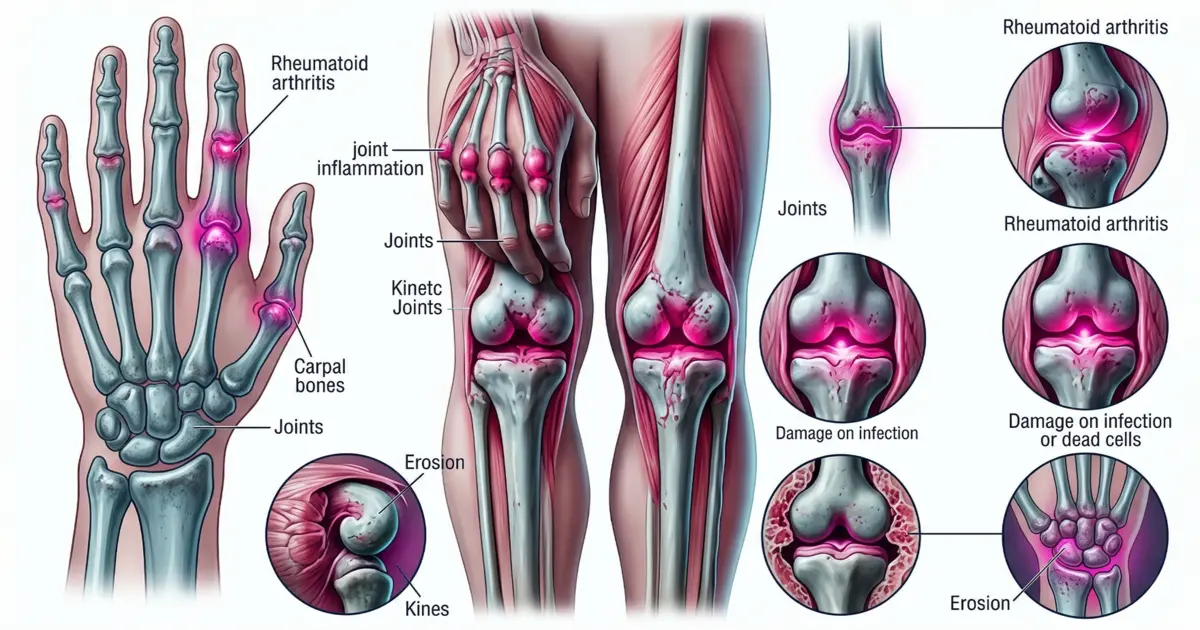
Waking up to stiff, aching fingers, wrists and knees is a hard daily reality for many people living with rheumatoid arthritis. The pain is physically draining and can weigh heavily on the mind too. When your own body feels like it’s working against you, finding both relief and a little peace becomes a real priority. The most important part of that is proper care from a rheumatologist — and alongside it, some people find a gentle, traditional therapy like Hijama (cupping) soothing and calming.
Why rheumatoid arthritis needs a rheumatologist
Rheumatoid arthritis (RA) is not ordinary “wear and tear.” It is an autoimmune disease in which the immune system mistakenly attacks the lining of the joints, causing swelling, pain and — if it isn’t properly controlled — lasting joint damage over time. This is why RA needs to be diagnosed and managed by a rheumatologist, who can prescribe disease-modifying treatments that actually slow the disease and protect your joints. Modern RA medication isn’t just pain relief; it changes the course of the disease.
Because the damage can become permanent, the single most important thing is to stay under your specialist’s care and take your prescribed treatment as directed. If you’re looking for full-body joint pain support in Lahore, that medical plan comes first — and complementary therapies like Hijama can only ever sit alongside it, for comfort.
Medical RA treatment and Hijama: how they differ
Medical treatment and traditional therapies do completely different things. The table below explains what each is for — it is not a suggestion that Hijama can replace your medication, and it never should.
| Feature | Medical RA treatment | Hijama (cupping) therapy |
|---|---|---|
| What it is for | Controls the disease and protects the joints | A relaxing therapy for comfort and wellbeing |
| Who provides it | A rheumatologist and medical team | Trained Hijama therapists, alongside your doctor |
| Effect on the disease | Slows progression; can prevent joint damage | No effect on the disease; valued for relaxation |
| How to use it | Stay on your prescribed treatment — Hijama only as optional comfort, never a replacement | |
How Hijama may support comfort
In a session, trained therapists apply cups to areas such as the back using gentle suction, which encourages local blood flow and lifts the soft tissue. Many people describe the experience as warm and relaxing, and find that the muscle tension that builds up around painful, guarded joints feels eased afterwards. For someone living with constant discomfort, that sense of calm and being cared for can be genuinely welcome.
It is honest to be clear about the limits: there is no good evidence that cupping reduces the autoimmune inflammation of RA or changes the disease in any way. What it may offer is short-term comfort and relaxation — a gentle companion to your medical care, never a substitute for it.

Can cupping therapy cure arthritis pain?
It’s a question many people living with chronic pain understandably ask. The honest answer is no — cupping cannot cure RA or its pain, and it does not stop the disease from progressing. What some people find is that a session leaves them feeling more relaxed and temporarily more comfortable. That can be a reasonable reason to try it for wellbeing, as long as your rheumatologist stays firmly at the centre of your treatment and your medication continues exactly as prescribed.
Sunnah Hijama in Lahore — the traditional view
Hijama has deep roots in Prophetic and traditional healing, and for many families in Pakistan it brings comfort and a sense of peace. According to tradition, it is valued not just for the body but for calming the heart. We honour that tradition while being clear about what it is: a complementary therapy chosen for comfort, carried out with modern hygiene and care — alongside, never instead of, medical treatment for a serious condition like RA.
Why a clean and professional clinic matters — especially with RA
Hygiene matters in any cupping session, but it matters even more for people with RA. Many RA patients take medication that suppresses the immune system, which can make infections more likely and harder to fight. That is exactly why wet cupping — which involves tiny skin incisions — must only ever be done with sterile, single-use equipment by a trained therapist, and only after you’ve checked with your doctor.
At Al Madina Hijama Center, every session uses sterile, single-use disposable equipment, and our trained therapists handle sensitive cases with care. Our commitment is to keep you safe and comfortable — and to encourage you to keep your rheumatologist closely involved in your care.
Conclusion: comfort, with your medical care at the centre
Living with rheumatoid arthritis is hard, and it’s natural to want every gentle source of relief along the way. The strongest, most protective step you can take is to stay under your rheumatologist’s care and continue your prescribed treatment — that is what protects your joints for the long term.
From there, if a calming therapy like Hijama helps you feel a little more at ease, our trained therapists in Lahore are here to look after you safely and professionally — always alongside your medical treatment, never in place of it.