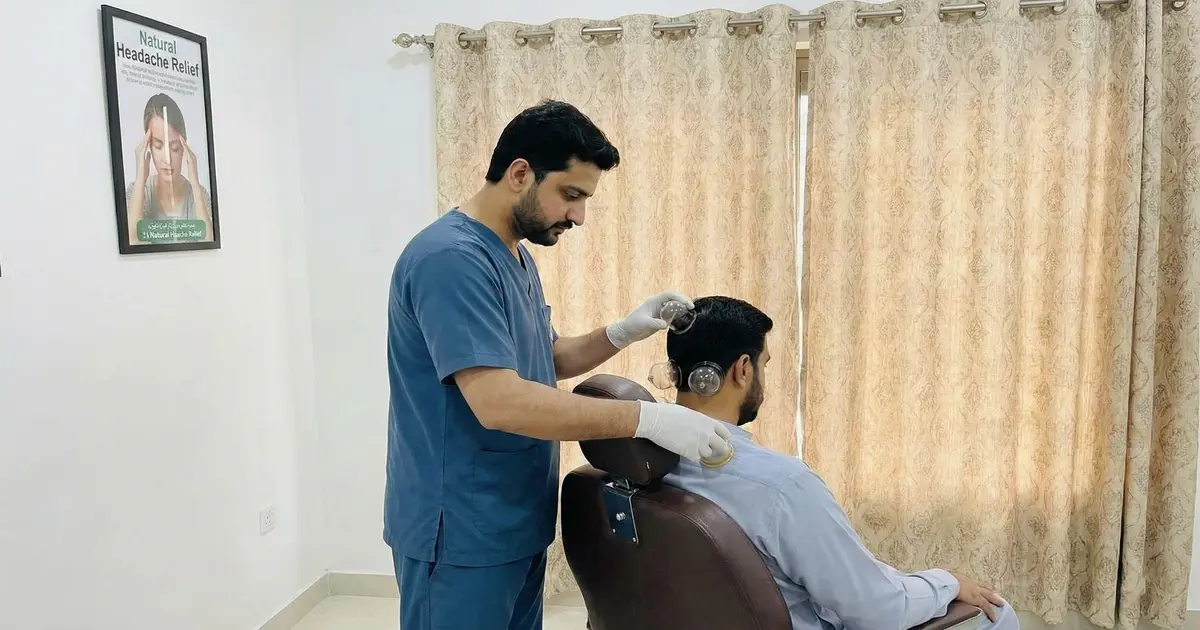
For many people in Lahore, frequent headaches and migraines can quietly take over daily life. Painkillers help, but a lot of people also look for gentler, natural options to feel more comfortable. Hijama (cupping) is a traditional therapy that many find relaxing for the muscle tension that builds up in the neck, shoulders and head. Used alongside proper medical care, it can be a soothing part of how you cope with tension and stress — though for migraines themselves, the right path always starts with a doctor.
How Hijama may help with head and neck tension
A lot of everyday headaches are linked to tight muscles in the neck, shoulders and upper back — the kind of tension that builds from stress, screen time, poor posture and long days. In a Hijama session, trained therapists apply cups to these areas using gentle suction, which encourages local blood flow and lifts the soft tissue. Many people experience this as a release of tight muscles and describe a calming, relaxed feeling afterwards.
What people commonly notice:
- Eased tension across the neck, shoulders and upper back.
- A general feeling of relaxation and calm after a session.
- Relief from the muscle tightness that can accompany tension-type headaches.
It’s honest to say the scientific evidence for cupping in headache and migraine is limited and mixed, and results vary from person to person. We offer it as a relaxing, complementary therapy — not a cure, and not a replacement for medical care.
Two different approaches: medical care and Hijama
Medical treatment and traditional therapies do different jobs, and many people use them together. The table below explains what each is for — it’s not a claim that one replaces the other.
| Feature | Medical headache care | Hijama (cupping) therapy |
|---|---|---|
| What it is for | Diagnosing and treating the cause of headaches | A relaxing therapy for muscle tension and comfort |
| Who provides it | Doctors and neurologists | Trained therapists, alongside your doctor |
| Evidence | Established, evidence-based treatments | Limited evidence; valued for relaxation |
| How to use it | As advised by your doctor | As optional, complementary comfort |

What happens in a session
A typical visit is straightforward and unhurried:
| Step | What it involves |
|---|---|
| Consultation | A chat about your headaches and where you carry tension |
| Dry cupping | Cups are placed to create gentle suction and relax the area |
| Cleaning | The skin is sanitised to keep things hygienic |
| Wet cupping (if chosen) | Tiny superficial scratches are made and a small amount of blood is drawn, using sterile single-use tools |
| Aftercare | The area is cleaned and covered to help it settle |
Things to consider before a session
A few simple things help you get the most comfortable experience:
- Medical history: tell your therapist if you have anaemia, low blood pressure, are pregnant, or take any medication (especially blood thinners), as wet cupping may not be suitable or may need extra care.
- Timing: it’s usually best to come on a fairly light stomach — not very full, not very hungry — to avoid feeling light-headed.
- Hydration: drinking water before and after simply helps you feel better.
- Rest: plan for some light rest afterwards so you can take it easy.
Supportive services at Al Madina Hijama Center
- Hijama for tension and comfort: cupping at traditional Sunnah points on the head, neck and shoulders to ease muscle tension.
- Ruqyah: spiritual support that many find calming and reassuring for peace of mind.
- Lifestyle and diet guidance: simple suggestions on rest, hydration and habits that support general wellbeing.
In summary
If headaches are part of your daily life, the most important step is a proper check-up with a doctor, who can find the cause and offer treatments that work for migraine. Alongside that, if a gentle therapy like Hijama helps you feel more relaxed and eases muscle tension, our trained team in Lahore is here to look after you in a clean, professional setting — as a complement to your medical care, never a replacement for it.