Chronic shoulder stiffness can quietly take over your day — making it hard to dress, sleep, or reach for something on a shelf. If conventional painkillers aren’t giving lasting relief, many people in Lahore start looking for gentler, natural options. Hijama (cupping) is one such traditional therapy, widely used for muscle tension and stiffness, and many people find it relaxing and helpful for everyday aches. Used alongside proper medical care, it can be a supportive part of how you manage shoulder pain.
What frozen shoulder is, and why a proper diagnosis matters
“Frozen shoulder” (adhesive capsulitis) is a specific medical condition in which the shoulder capsule becomes thickened and tight, causing pain and a progressive loss of movement. It typically moves through stages over many months, and the mainstay of treatment is usually guided physiotherapy, with a doctor sometimes recommending other medical options. Because true frozen shoulder behaves differently from ordinary muscle strain, it’s worth having a doctor or physiotherapist confirm what’s actually causing your stiffness before you decide on a plan.
That diagnosis matters because the right approach depends on the cause. If you’ve been searching for how to relieve frozen shoulder in Lahore, the most reliable path is a proper assessment first — and then complementary therapies like Hijama can sit alongside that care to help with comfort and muscle relaxation.
How cupping may help with shoulder and muscle pain
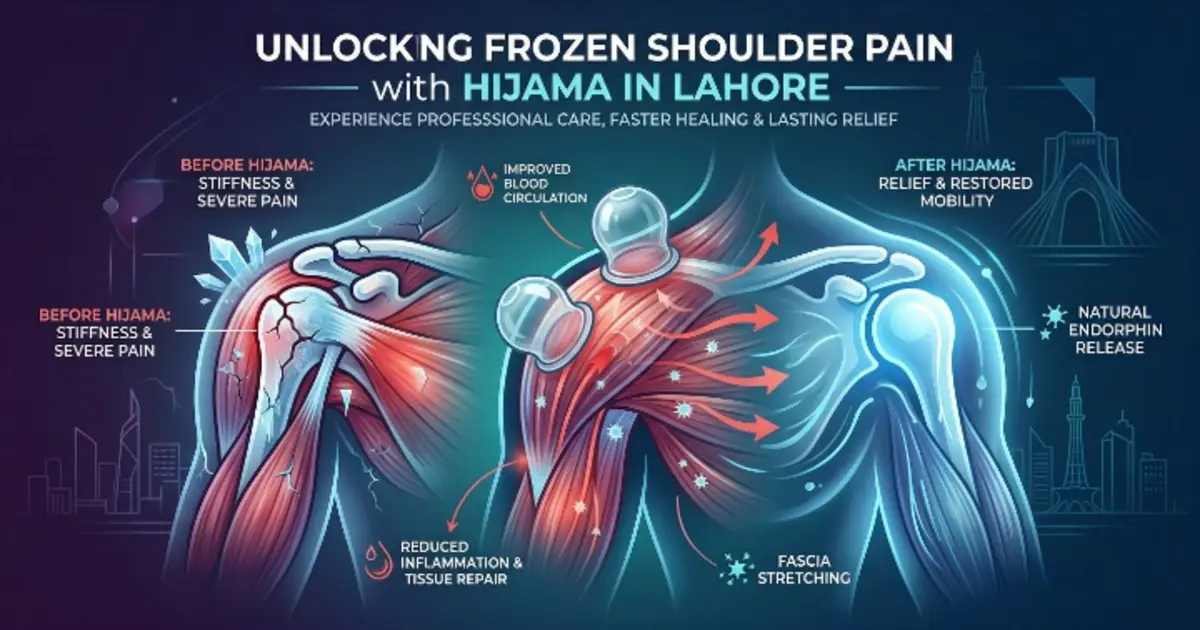
In a session, trained therapists place cups on specific areas of the back, shoulder and arms using gentle suction. This encourages local blood flow to the area and lifts the soft tissue, which many people experience as a release of tight muscles and stubborn knots. For a lot of patients, that feeling of eased tension and relaxation is the main reason they value the therapy for everyday muscle aches.
It’s fair to be clear that the scientific evidence for cupping in musculoskeletal pain is still limited and mixed, and results vary from person to person. What we can promise is a careful, hygienic, comfortable session — offered as a complement to your medical care, not a replacement for it.
Can cupping therapy help with the shoulder?
The gentle suction stretches the fascia and surface muscles, which can relieve the sensation of tightness around the shoulder and upper back. Many people also describe a calming effect afterwards, which some link to the body’s own relaxation response. It’s a reasonable option to try for comfort — just not a substitute for the targeted exercises a physiotherapist would prescribe for genuine frozen shoulder.
Sunnah Hijama in Lahore — the traditional view
Hijama has deep roots in Prophetic and traditional healing, and for many families in Pakistan it is a trusted, time-honoured practice. Practitioners pay attention to specific points on the back and shoulders, and the therapy is valued as a natural way to feel eased and cared for. We honour that tradition while being clear about what it is: a complementary therapy for comfort and wellbeing, carried out with modern hygiene and care.
The balance between cost and safety in cupping therapy
When it comes to Hijama, your safety should always come before a cheap price. Proper hygiene and single-use, sterile cups protect you from the real risk of infection, and an experienced, trained therapist makes the session both safer and more comfortable. Choosing an untrained person to save money can lead to genuine harm. The table below shows why a certified clinic is the safer choice.
| Feature | Untrained / very cheap setup | Certified clinic (Al Madina) |
|---|---|---|
| Hygiene | Uncertain; risk of infection | Strict hygiene protocols |
| Equipment | Possibly reused cups | Sterile, single-use equipment |
| Expertise | Little or no training | Trained, experienced therapists |
| Aftercare | Usually none | Clear after-care guidance |

Understanding Hijama treatment cost in Lahore
The cost of Hijama varies across clinics in the city, and a few factors usually explain the difference: the clinic’s location, the therapist’s experience, and how many sessions you choose. Clinics that charge a little more often invest in better hygiene standards and proper after-care guidance. It’s worth comparing a few options carefully so you make an informed choice without compromising on safety. A good clinic will be transparent about pricing and won’t pressure you into more sessions than you want.
What this therapy may offer you
For many people, the value of cupping isn’t a one-off fix but ongoing comfort. Regular sessions may help ease day-to-day muscle tightness and leave the area feeling more relaxed and mobile. When everyday muscle aches settle, some people also notice they rest more easily at night.
It’s honest to set expectations realistically: cupping may help you feel more comfortable and relaxed, but for a true frozen shoulder, lasting improvement in movement usually comes from a proper physiotherapy programme. Think of Hijama as a supportive companion to that care, not a replacement for it.
A safe, professional and hygienic clinic
At Al Madina Hijama Center, every session uses sterile, single-use equipment and is carried out by trained, experienced therapists in a clean, comfortable setting. Our focus is on doing the therapy safely and well — and on encouraging you to keep your doctor or physiotherapist involved for any ongoing shoulder problem.
Conclusion: don’t ignore persistent shoulder pain
Shoulder stiffness that lingers deserves proper attention, because the right treatment depends on knowing the cause. Start with a doctor or physiotherapist’s assessment, especially for suspected frozen shoulder. From there, if a gentle therapy like Hijama helps you feel more comfortable and relaxed, our certified therapists in Lahore are here to look after you in a clean, professional environment — alongside your medical care, not instead of it.